Aquant vs. Five9


From contact center automation
to service resolution.
The difference is what happens when a customer needs more than an answer. Aquant has the domain expertise to understand equipment, diagnose failure modes, interpret service history, and guide customers and technicians through resolution. Rather than simply managing the interaction, Aquant helps solve the underlying problem. Whether you're looking to reduce administrative work, automate routine calls, identify at-risk customers, or address other operational challenges, Aquant has specialized agents to help your team get there.

Purpose-built for physical product service
Aquant understands the products, parts, symptoms, fault codes, repair procedures, and technician knowledge that general-purpose contact center platforms aren't designed around. It can diagnose issues, guide troubleshooting, and determine when a field visit is necessary and what technicians need to complete the repair.

Beyond voice and chat
With camera-based AI, customers and technicians can show an issue instead of struggling to describe it. Aquant combines voice, text, and visual interactions to support troubleshooting and resolution across the service journey.

One platform. Multiple specialized agents.
Aquant orchestrates specialized agents built within its platform alongside third-party agents and AI capabilities. These agents work together behind a unified experience, coordinating tasks and workflows across systems without forcing users to navigate multiple tools.

More than a call summary: Aquant learns
Aquant doesn't just summarize calls, it learns from them. Every summary feeds back into the system, building a service-specific understanding of your products and fixes. Documentation goes further, too: teams can create knowledge articles just by speaking to Aquant and describing how they fixed an issue. The result is a flywheel. The more it's used, the smarter it gets, and it can flag emerging issues your teams need to know about.

Starts with the routine. Grows from there.
Once documentation is in place, Aquant can start handling the easier, routine issues. As more people interact with it, the system gets smarter and takes on more. Summarization is the first step, not the finish line.
Service intelligence, wherever work happens
With an API-first, headless architecture, Aquant can be embedded into existing CRMs, portals, mobile apps, connected products, and technician workflows. It also turns conversations into structured service records, capturing equipment details, symptoms, fault codes, parts, and resolutions—not just call summaries.

Deep Domain Intelligence
A service-specialized Autonomous Linguistics Engine trained on millions of real service tickets, error codes, schematics, and IoT signals.
Human-in-the-Loop Automation
Precise insights, action plans, and recommendations that amplify human judgment, never blind autonomy.
Rapid Time to Value
Pre-built, field-tested agents that get you running in weeks, not months, with no heavy ontology work or custom model training.

Reduced Risk & Lock-In
A standalone SaaS platform that integrates seamlessly with any CRM or ERP, no Salesforce licenses required.
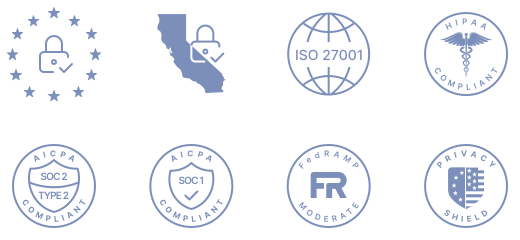
Die höchsten Vertrauens- und Sicherheitsstandards
FAQ
The agentic AI platform built for your entire service team
Absolutely! Roger (Aquant's voice AI) is capable of triggering multiple tasks simultaneously. For example, it can interact with agents built within Aquant’s Agent Studio, third-party agents, or even various third-party MCP tools. It can also connect to a wide range of backend systems through Aquant’s connectivity platform. This means the agent can not only read information from these systems but also modify it as needed. In other words, it’s fully equipped to handle multiple workflows at once, making it really flexible for your needs.
Yes, absolutely! There are a couple of ways to handle authentication. One method is using Roger (Aquant's voice AI) directory of authorized callers, where Roger checks incoming calls against that list and rejects unauthorized ones with a customizable message. Additionally, Roger can also integrate with external identity providers to verify if a caller is authorized. This means it can reach out to these external systems to confirm caller identity before letting them through. All of this is configurable and the caller info can be passed along to downstream CRM tools if you have those set up. This should help ensure only the right callers get through!
Absolutely. Aquant is multimodal in several important ways. Users can interact with it using text, voice, files, and images. Aquant can ingest and reason over complex enterprise content like service manuals, logs, spreadsheets, schematics, tables, images, videos, and even handwritten notes embedded in documents. Outputs are generated by reasoning across all of that content, not just text. And beyond UI-based interaction, Aquant also supports voice AI via phone calls, which adds an entirely new interaction modality for service use cases. So we are multimodal at the input layer, content layer, and interaction layer.
Yes. Aquant can accelerate onboarding with a dedicated Training Agent that supports technicians before and during live jobs. It can:
- Walk new techs through common procedures and troubleshooting flows
- Provide scenario-based practice (symptom → diagnosis → resolution) using real historical cases
- Quiz for understanding and reinforce best practices
- Recommend learning paths based on gaps (e.g., error codes, parts handling, safety steps)
This helps standardize how techs learn and reduces reliance on a small number of senior experts.